
Summertime is a perfect time to entertain and thank your Major Donors! It is also a perfect time to entertain and evaluate unique fundraising events to add to your annual calendar. Delight your donors with these unique ideas!
Category: Cultivation
DOES YOUR CUSTOMER SERVICE DELIVER DONOR HAPPINESS?
July 4th and lots of peeps are on vacation! Seems a great time to ask the question, how’s your customer service? Who and How are your donors being communicated with this summer?

Need Some Creative Ways to Thank Your Donors?
How about some great ideas for thanking your donors that will keep you showing sincere gratitude while building a solid connection and future relationship? check it out!

A DOZEN MAJOR GIFT TIPS FOR YEAR-END SUCCESS
Just in time for year-end success, 12 tips to review for Major Gift love!

Thanking Your #GivingTuesday New Donors
Everyone agrees that #givingtuesday is a new donor goldmine but that gold will quickly disappear if you’re not instantly welcoming and thanking those wonderful peeps qui

FUNDRAISERS GIVING, CARING, and SHARING DECEMBER TO DO LIST
Have you ever wondered what the best Major Gifts non-profit departments are going to be doing this December to make sure year-end results are spectacular? Veritus Group shares what their top clients put at the top of their December To Do’s so listen up!

ULTIMATE DONOR THANK YOU CHECKLIST
You’ve got the donation, but your work is not done. Sending a great thank you letter is the most important step in keeping your donors for the long term.
Thank you letter checklist
You’ve got the donation, but your work is not done. Sending a great thank you letter is the most important step in keeping your donors for the long term. Lisa Sargent has compiled an essential thank you letter checklist for the Showcase of Fundraising Innovation and Inspiration website, www.sofii.org.
Here are some important questions to ask about your thank you letter. Hint: All your answers should be “yes!”
1. Is your letter personalized? Do you mention the gift amount?
2. Do you start with something other than “Thank you for your gift”? Use an exciting lead.
3. Do you tell your donor when and how they will next hear from you?
4. If this is a repeat gift, do you also thank the donor for their past generosity and continued contributions or support?
5. If this is a gift membership, do you thank the giftee and talk about what this kind of gift makes possible? And do you send a thank you letter to the giftor as well?
6. Do you say something new or timely in the PS? Upcoming opportunities to meet with you make a perfect PS.
7. Do you include a contact number or email for your donor to use if they have a question?
8. Do you need to thank them for something specific? Examples of this include a membership, a holiday gift, or a memorial.
9. Do you reference something specific such as a gift you’ll be sending or a certificate you have enclosed?
10. Do you mention your Facebook or social media page in your letter? Include a call to action directing them to your page.
Now that you have confirmed that you have included all the essential information, here are some additional guidelines for writing a successful thank you letter.
1. Keep the letter short. It should be three to four paragraphs plus your PS.
2. Include required tax deductible language.
3. Use the word “you.” Don’t use “we” or “our,” because they make it happen and your thank you should focus on the donor.
4. Thank them more than once in the letter.
5. Proof your letter. Read it out loud and have someone else check it for grammar and spelling.
6. Hand sign them all if you can. If you have too many donors, determine the dollar amount that you will hand sign. Phone calls are also great additions when thanking your top donors!
7. DO NOT include an additional ask or a request to upgrade to monthly giving. Instead, it is acceptable to include a reply envelope.
WHY DONORS GIVE MORE
Want to know why Donors Give More? The Burk Donor Survey provides some revealing answers!
Want to know why Donors Give More? The Burk Donor Survey provided some great info about donors and guess what? 21,000 donors completed this survey and 1/3rd of those donors said they could give more! Better watch for some handy tips as you get ready now for year-end fundraising!
Why Donors Give More
We can really boost our fundraising with a little insight into our donor’s minds. Fortunately, The Chronicle of Philanthropy reported the results from The Burk Donor Survey. The report includes some great information about why donors give or don’t give and how to inspire them to give more.
21,000 donors completed the survey and a third of them said that they could give more!!!
Research
Your donors are researching what you are doing. Here is where they are finding their information:
• 54% look at your website.
• 42% consult an online charity watchdog.
• 27% search online for information about your group.
• 26% ask people they trust about your organization.
• 23% review news media reports about your group.
The research your donor’s conduct has a big impact on their decision to make a gift.
• 41% decide not to donate after seeing a charity’s website.
• 41% say a charity’s results determine whether they make a gift.
Donor Quotes
“I would prefer to give more to fewer causes where I can see the results.” Donors want to make an impact!
“Non-profits would do better focusing on success stories … then by trying to make those of us who are considering donating feel privileged and guilty.” Stories are important!
“I dislike being bombarded by donation requests.” Be strategic in your appeals!
“A number of causes left me feeling personally unappreciated.” Saying thank you is essential!
Giving MORE
So why do donors give more? Here are the two biggest reasons donors gave:
• 41% were impressed with the efforts of the nonprofit.
• 26% responded to a special request for support.
How can you inspire your donors to give more? Here are the top five answers:
• 22% would give more if the charity demonstrated an extraordinary need for support.
• 22% would give more if they saw reduced administrative and fundraising expenses.
• 21% would like you to stop sending unwanted gifts and trinkets.
• 19% would give more if the charity sent fewer solicitations.
• 15% would like more information on what gifts accomplish.
Remember, 31% of donors said they could have given more. And 41% of donors under the age 35 said they could have given more. Don’t leave this money on the table! Every little effort – your stories, your website, your donation page, your thank you notes – it all adds up and will pay off.

Landing the Big Major Gift Now
Major Gift Success Tips In Time For Year-End Success
Major Gifts Success
With only 90 days left in the year, do we still have time for major gifts? Of course! But you need to start now.
Your annual giving program is the primary source of major gift prospects. Five to twenty percent of all donors who give by direct mail really have more than $1 million in liquidity and gift capacity. This means there is a treasure trove of prospects right there on your mailing list. You just need to find them and start cultivating them.
A great source of major gifts information is the book Rainmaking, the Fundraiser’s Guide to Landing Big Gifts by Roy C. Jones and Andrew Olsen.
Here are the steps you need to take now to have major gift success this year:
Step 1: Review
First, review last year’s numbers. Who were your biggest donors? Are there donors on your list who could be giving more?
Step 2: Prioritize
Now you can decide who your best suspects for becoming major donors are. Move these individuals to prospects. This is called moves management.
Step 3: Get on the phone
The next step is to make phone calls! These calls must be important, scripted, and purposeful. Make a calling plan and stick to it. Your goal for these phone calls is to secure a meeting. Likely, it will take a lot of time and phone calls to reach this goal. To simply talk to 10 people, you have to dial the phone over 50 times and leave over 20 voicemails. Talking to those 10 people will yield you about three meetings. Yes, it’ll take you 50 phone calls to get just three meetings. So start calling!!!
Step 4: Meeting preparation
Now that you’ve got some meetings set up, the next step is to attend the meetings, right? Not so fast! You need to seriously prep and plan for the meeting first. Put a customized cultivation plan together for every donor you are going to meet with. Make sure you know what you are going to talk to them about, which of your programs interest them most, and what you are going to ask them for. The more prepared you are, the more likely you are to have a successful meeting.
Magic ‘Moves Management” Steps for Major Gift Success
Moves Management Skills
Perfecting moves management is essential to securing major gifts. David Dunlap is a moves management pioneer. He says the moves concept focuses major gift fundraising on changing people’s attitudes so they want to give.
What are moves?
A cultivation opportunity. Any great way to get to know your prospect better and let them get to know your organization, mission, and programs better. A move must be important enough and passionate enough that the prospect regards this as wonderful giving opportunity to your organization. You must know something about the prospect before this visit. Cultivation must be according to a plan and mission directed. You must know exactly what you want to accomplish.
Examples of cultivation opportunities:
• Behind the scenes tour or your facility
• An invitation to a small special event
• An insider’s newsletter
• An invitation to lunch or dinner with Director of Development, Executive Director, or a member of your Board of Directors
• An invitation to give feedback on latest event or case statement
Cultivation Visits
In order to have a successful cultivation visit, you must have a plan and a clear goal. The visit should be focused and goal oriented.
Here are five things to consider while preparing for your visit:
1. What is the best possible outcome and the minimum acceptable outcome?
2. Review the key points you are going to cover.
3. List a small number of benefits that you believe will appeal to the prospect.
4. Determine what you will ask your donor to do, agree to, or react to.
5. List anticipated questions and your responses. Remember questions are good, you just want to make sure you have a great response.
Here are eight steps to get started:
1. Select 10 – 25 of your best prospects.
2. Gather research on each and every one of them.
3. Identify volunteer board members and staff for each prospect.
4. Consult board members and staff that you think know each donor the best to find out as much as you can about the donor and their motivation.
5. Develop a strategy for each donor with definite gift amounts and opportunities.
6. Plan your next moves based on your strategy.
7. Implement those moves!
8. Review your moves
It is very important to be able to track your moves and your progress. Your database should include a pre-programed moves management system with reporting. If you don’t have access to this, use a calendar software. Just enter the moves you want to make and set a reminder for each.

4th Quarter Calls for Donor Retention & Upgrading
Retain and upgrade
Did you know that Individual donors account for 72% of all giving? Just think of how much more you could raise if you could retain and upgrade all of your donors. The sky is the limit! It is essential that you take the necessary steps to not only keep your donors but to encourage them to give more.
How to Retain Your Donors
Your current donors are your low hanging fruit, your easiest targets. You already know they are invested in your cause and they care about your mission. However, if you don’t handle them correctly, they could very easily take their donations elsewhere. Here’s how to keep them:
APPRECIATE THEM!
Organize a call unit to make phone calls to thank them for their past donations. Mention how grateful your organization is for their support in each appeal letter. Make sure they feel special and valued.
TELL THEM HOW THEY MADE A DIFFERENCE.
What did you do with the last gift your donor sent you? Did it pay for 10 children to attend camp? Buy food for 20 families? Sharing the tremendous impact that your donor made on the lives of others will not only make them feel good about their last gift, it will make them eager to give again!
How to Upgrade Your Donors
A sure way to raise more money for your cause without even having to find more donors is to get your current donors to give more. Some donors tend to send the same check year after year, while others may jump around based on their personal situation. Here are a few ideas for getting them to upgrade:
SUGGESTED GIVING LEVELS
How will your donor ever know that you could really use $150 instead of the $100 they’ve been sending every year? Simply suggesting a higher gift amount is sure to get your donor to at least consider upgrading. As long as it is done respectfully and thoughtfully, you’ll never offend a donor by suggesting a higher gift amount.
USE SPECIFIC DATA
Use specific numbers, goals, and costs when suggesting a donor increase their gift. Tell them why you need it and what it will do. Justify your ask.
MOVES MANAGEMENT
The most important thing you can do to upgrade your donors is develop a good moves management program. Look through your donor data and chart out who you plan to upgrade and how you plan to get there. Then, of course, make sure you follow your plan!
How to Handle Downgrades
Some donors are going to downgrade. That’s life. Maybe they were hit with unexpected bills, a job change, or felt like they needed to spend more of their donation dollars somewhere else. Regarding these donors with care and respect is vital. Don’t lose these donors!
RECOGNITION
Form a recognition society based on longevity of giving. This will make your donors realize that they are still important to you. They’ll want to keep on giving to stay in the “club.”
COMMUNICATION
Keep the lines of communication open. Make sure they are still receiving information about your programs and the impact of their donation. You could even explore other methods of giving from in-kind gifts to planned giving.
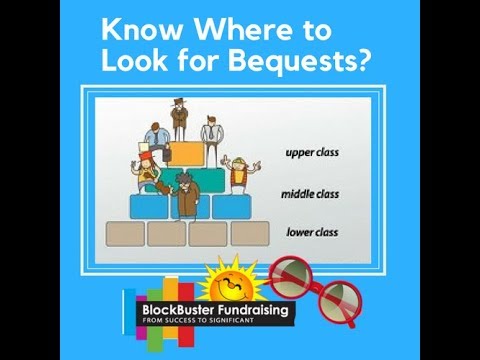
Non Profits Seeking Bequests
As non-profit pros, we know those beloved Bequests are hugely important to our organization and provide for stable future growth. We all wonder where those bequests will come from and how to identify donors that have true interest in putting our cause in their financial plan.