How about some great ideas for thanking your donors that will keep you showing sincere gratitude while building a solid connection and future relationship? check it out!
Category: Donor Stewardship
5 Keys To Make Your Donors Feel Special
Showing gratitude and making your donors feel very good about the impact they are having is the answer to fundraising success. Here are 5 steps to donor success.
MAGIC WORDS FOR FABULOUS YEAR END FUNDRAISING RESULTS
Use these magic words in your year-end emails and love your fundraising results because these words really do work!
Write Annual Appeals with Passion
Are you wringing your hand instead of writing a super impassioned annual appeal? Here are some great tips to unlock your best appeal ever! Let’s get started!
Live Review of Those NonProfit Cards and Letters
The Mailbox is absolutely full of the nonprofit cards and letters now and here at Blockbuster we’re taking some time today to go over and pick out best ideas to borrow now in time for year-
Are You Comfortable With The Legacy Conversation?
Year-End means ‘meaningful’ gratitude conversations with your very best donors! This could be a perfect opportunity to get a good sense of your donors level of commitment and future support! Do you have the right question to segue into Legacy Giving? Watch now!

Excellent ONLINE Checklist for YearEnd Fundraising
Use this excellent checklist when crafting your OnLine annual appeals for the best fundraising results you’ve ever produced.
You’ll definitely want to review this Online Checklist for ultimate year-end fundraising success!
AWESOME ANNUAL APPEAL IDEAS
Resist surrendering to the good news compulsion in your annual appeal. You have to make people want to help you. Your job is to convince them that you need their help.
Annual Appeal Suggestions and Who better to take annual appeal suggestions from than the Dean of Direct Mail? Jerry Huntsinger from the Showcase of Fundraising Innovation and Inspiration (SOFII) gives these nine great tips for winning appeal letters.
Tip #1 – Good news?
Resist surrendering to the good news compulsion. You have to make people want to help you. Your job is to convince them that you need their help. So if all you talk about is good news, they might think you don’t need their help.
Tip #2 – Talk about yourself
Don’t be reluctant to say “I.” Your donors want a letter from a real live person who is compassionate and cares about their mission. Don’t make it stuffy and institutionalized. Keep it real and personal.
Tip #3 – Surprise!
Don’t let your donors anticipate what you’ll do next. Keep them off balance; keep them guessing. Every fundraising package they receive from you should contain an element of surprise. Check your format and make it unique. You don’t want your donors anticipating your every move.
Tip #4 – Stories
Tell more stories this year about the needy people or animals you are helping. Your donors want to help real people and not an organization.
Tip #5 – Graphic Excitement
Put more graphic excitement in your letters. People are busy and save time by scanning the page and then deciding if the material deserves more of their time. Use bold font and underlining, short paragraphs, more attention grabbing statements, and more headlines.
Tip #6 – Loooong letter
Rethink your prejudice against long copy. This letter has to do a lot of telling and asking so you want to take your time. Make it longer and more compelling.
Tip #7 – No worries
Stop worrying about donors being offended by your fundraising appeals. Worry more about convincing them to send money! They want to hear from you. Don’t be shy. Just write a great letter with great stories.
Tip #8 – Getting to know you
Get to really know your donors specifically. Who signs the checks? Read the positive letters they send in. Every week call three donors at random and talk to them. Tell them you are trying to get to know your donors better.
Tip #9 – Thinking of you
Donors don’t think about you nearly as much as you think about them. They think about you when you call and when they receive a letter from you. So make it good! The better your communication with them, the more fondly they’ll remember you.
ULTIMATE DONOR THANK YOU CHECKLIST
You’ve got the donation, but your work is not done. Sending a great thank you letter is the most important step in keeping your donors for the long term.
Thank you letter checklist
You’ve got the donation, but your work is not done. Sending a great thank you letter is the most important step in keeping your donors for the long term. Lisa Sargent has compiled an essential thank you letter checklist for the Showcase of Fundraising Innovation and Inspiration website, www.sofii.org.
Here are some important questions to ask about your thank you letter. Hint: All your answers should be “yes!”
1. Is your letter personalized? Do you mention the gift amount?
2. Do you start with something other than “Thank you for your gift”? Use an exciting lead.
3. Do you tell your donor when and how they will next hear from you?
4. If this is a repeat gift, do you also thank the donor for their past generosity and continued contributions or support?
5. If this is a gift membership, do you thank the giftee and talk about what this kind of gift makes possible? And do you send a thank you letter to the giftor as well?
6. Do you say something new or timely in the PS? Upcoming opportunities to meet with you make a perfect PS.
7. Do you include a contact number or email for your donor to use if they have a question?
8. Do you need to thank them for something specific? Examples of this include a membership, a holiday gift, or a memorial.
9. Do you reference something specific such as a gift you’ll be sending or a certificate you have enclosed?
10. Do you mention your Facebook or social media page in your letter? Include a call to action directing them to your page.
Now that you have confirmed that you have included all the essential information, here are some additional guidelines for writing a successful thank you letter.
1. Keep the letter short. It should be three to four paragraphs plus your PS.
2. Include required tax deductible language.
3. Use the word “you.” Don’t use “we” or “our,” because they make it happen and your thank you should focus on the donor.
4. Thank them more than once in the letter.
5. Proof your letter. Read it out loud and have someone else check it for grammar and spelling.
6. Hand sign them all if you can. If you have too many donors, determine the dollar amount that you will hand sign. Phone calls are also great additions when thanking your top donors!
7. DO NOT include an additional ask or a request to upgrade to monthly giving. Instead, it is acceptable to include a reply envelope.
WHY DONORS GIVE MORE
Want to know why Donors Give More? The Burk Donor Survey provides some revealing answers!
Want to know why Donors Give More? The Burk Donor Survey provided some great info about donors and guess what? 21,000 donors completed this survey and 1/3rd of those donors said they could give more! Better watch for some handy tips as you get ready now for year-end fundraising!
Why Donors Give More
We can really boost our fundraising with a little insight into our donor’s minds. Fortunately, The Chronicle of Philanthropy reported the results from The Burk Donor Survey. The report includes some great information about why donors give or don’t give and how to inspire them to give more.
21,000 donors completed the survey and a third of them said that they could give more!!!
Research
Your donors are researching what you are doing. Here is where they are finding their information:
• 54% look at your website.
• 42% consult an online charity watchdog.
• 27% search online for information about your group.
• 26% ask people they trust about your organization.
• 23% review news media reports about your group.
The research your donor’s conduct has a big impact on their decision to make a gift.
• 41% decide not to donate after seeing a charity’s website.
• 41% say a charity’s results determine whether they make a gift.
Donor Quotes
“I would prefer to give more to fewer causes where I can see the results.” Donors want to make an impact!
“Non-profits would do better focusing on success stories … then by trying to make those of us who are considering donating feel privileged and guilty.” Stories are important!
“I dislike being bombarded by donation requests.” Be strategic in your appeals!
“A number of causes left me feeling personally unappreciated.” Saying thank you is essential!
Giving MORE
So why do donors give more? Here are the two biggest reasons donors gave:
• 41% were impressed with the efforts of the nonprofit.
• 26% responded to a special request for support.
How can you inspire your donors to give more? Here are the top five answers:
• 22% would give more if the charity demonstrated an extraordinary need for support.
• 22% would give more if they saw reduced administrative and fundraising expenses.
• 21% would like you to stop sending unwanted gifts and trinkets.
• 19% would give more if the charity sent fewer solicitations.
• 15% would like more information on what gifts accomplish.
Remember, 31% of donors said they could have given more. And 41% of donors under the age 35 said they could have given more. Don’t leave this money on the table! Every little effort – your stories, your website, your donation page, your thank you notes – it all adds up and will pay off.
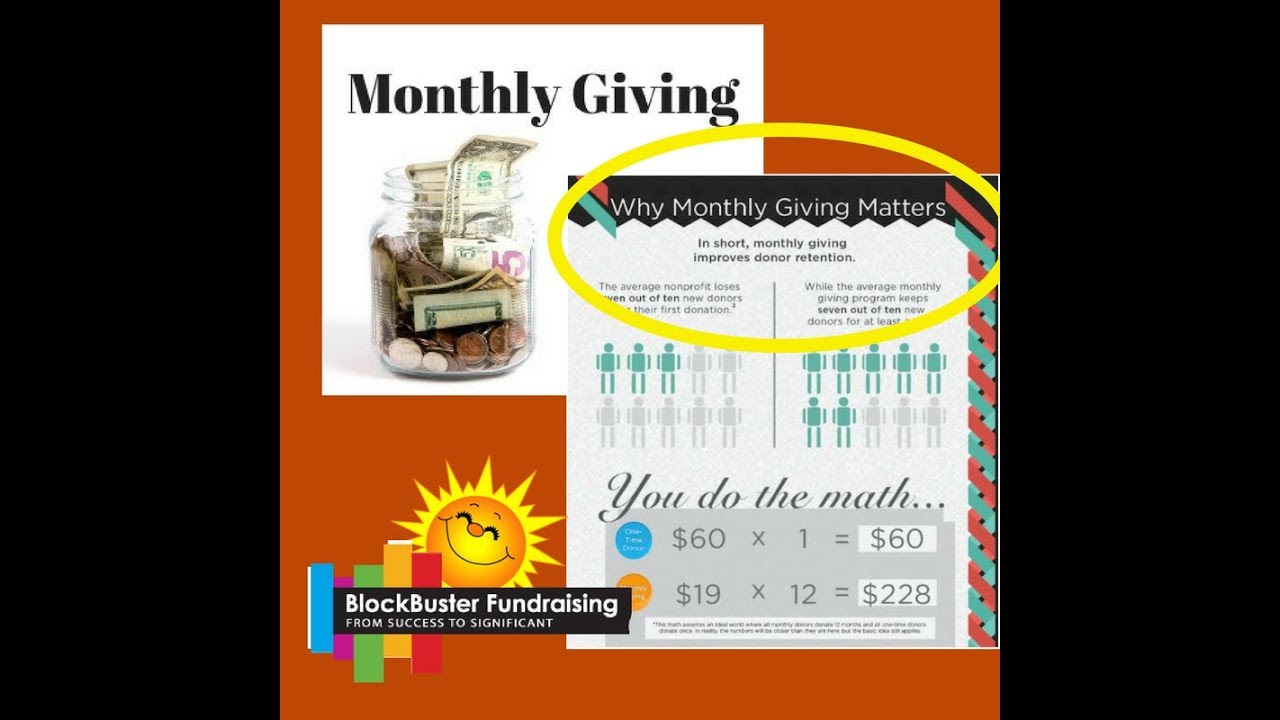
Why Monthly Giving Should Top Your To-Do List Now
Make Monthly Giving work for in time for year-end success!
It’s never been more important to put Monthly Giving ‘front and center’ in all your donor communications! Learn how to make it work for you and your year-end success!
A WINNING NEW DONOR WELCOME KIT
Most new donors will never give again, 70% to be more specific! So how do you keep them and turn them into loyal advocates for your cause?
Follow these brilliant steps from the New Welcome Plan Save the Children has put together! It Works!
And put together a welcome plan now in time for those #GivingTuesday new donors you are going to acquire this year!