Major gift fundraising isn’t rocket science! That is what major gift fundraising experts Jeff Schreifels and Richard Perry from the Veritus Group tell us in their blog. They do acknowledge that it is very hard work and it does require a process. Fortunately for us, Jeff and Richard developed a brilliant major gift process.
Here is their process broken down into seven steps:
Step 1: Cultivate the right donors.
You should have a qualified list of donors right now. These are donors that you plan to present to before year end. Now is not the time to chase unqualified major gift donors. Keep your list updated and organized.
Step 2: Have a revenue goal for each donor.
Setting goals is necessary to success. It gives you your destination. Look at each donor individually and determine a realistic goal for each.
Step 3: Have a strategic plan for each donor.
It is important to carefully plan how you’re going to achieve each goal. If you don’t have a roadmap you aren’t going to be able to stay focused and accountable. Your plans should be donor focused, so take time to identify and ensure you are serving the interest and passion of the donor.
Step 4: Meet face-to-face.
Half of your time now should be spent face to face with your prospects. You’ve already done the research and know all about them so now you need to meet in person.
Step 5: Be donor-centric.
Match your program ask with the hopes, dreams, and desires of the donor. Know exactly what about your mission that they are passionate about and be sure you are focusing on that anytime you talk to them.
Step 6: Thank your donors.
When they give, thank them immediately. Make sure it is heartfelt and personalized. Have leadership in your organization call them in addition to the standard letter.
Step 7: Report back.
Make sure they know they made a difference and understand their impact.
Perfecting moves management is essential to securing major gifts. David Dunlap is a moves management pioneer. He says the moves concept focuses major gift fundraising on changing people’s attitudes so they want to give.
What are moves?
A cultivation opportunity. Any great way to get to know your prospect better and let them get to know your organization, mission, and programs better. A move must be important enough and passionate enough that the prospect regards this as wonderful giving opportunity to your organization. You must know something about the prospect before this visit. Cultivation must be according to a plan and mission directed. You must know exactly what you want to accomplish.
Examples of cultivation opportunities:
• Behind the scenes tour or your facility
• An invitation to a small special event
• An insider’s newsletter
• An invitation to lunch or dinner with Director of Development, Executive Director, or a member of your Board of Directors
• An invitation to give feedback on latest event or case statement
Cultivation Visits
In order to have a successful cultivation visit, you must have a plan and a clear goal. The visit should be focused and goal oriented.
Here are five things to consider while preparing for your visit:
1. What is the best possible outcome and the minimum acceptable outcome?
2. Review the key points you are going to cover.
3. List a small number of benefits that you believe will appeal to the prospect.
4. Determine what you will ask your donor to do, agree to, or react to.
5. List anticipated questions and your responses. Remember questions are good, you just want to make sure you have a great response.
Here are eight steps to get started:
1. Select 10 – 25 of your best prospects.
2. Gather research on each and every one of them.
3. Identify volunteer board members and staff for each prospect.
4. Consult board members and staff that you think know each donor the best to find out as much as you can about the donor and their motivation.
5. Develop a strategy for each donor with definite gift amounts and opportunities.
6. Plan your next moves based on your strategy.
7. Implement those moves!
8. Review your moves
It is very important to be able to track your moves and your progress. Your database should include a pre-programed moves management system with reporting. If you don’t have access to this, use a calendar software. Just enter the moves you want to make and set a reminder for each.
You still have time in 2017 to make your major gifts super successful with these 13 steps from the book, Rainmaking: The Fundraisers Guide to Landing Big Gifts. Roy Jones and Andrew Olsen give us great ways to engage and connect with our major gift donors right now.
13 Tips for Major Gift Commitment
It is always great to find new ways to engage and connect with your major gift donors. Roy Jones and Andrew Olsen offer 13 ideas for on how to do just this in their book, Rainmaking: A Fundraisers Guide to Landing Big Gifts.
Tip #1: Meaningful experience
There is no better way to create engagement than giving your donors the opportunity to experience working with you. It will help them understand what you are doing and become more committed.
Tip #2: One-on-One
Spend time with your major donor prospects one-on-one. This will help build a deep meaningful relationship.
Tip #3: Host small group events
Engaging your major donors with small intimate events is a wonderful way to build commitment. Small lunches at the home of a board member is a great way to do this. You will be able to gather great insight into your donors at these events.
Tip #4: Ask for feedback
It is a great idea to ask your major donors for feedback on a program they support or your future plans. Everyone likes it when their opinion is sought after and it will make your prospects feel respected and valuable.
Tip #5: Special event special gathering
For your upcoming events, create special pre- and post-event gatherings that are by invite only. This will give your prospects an opportunity to engage with leadership and with other major donors.
Tip #6: Leadership access
Invite your major donors to meet your board and senior executives. Your major donors expect a certain level of access. Ensuring they have a clear line of communication with your leaders is an important step in building trust
Tip #7: Special communication
Create a special monthly communication from your executive director just for your major donors. This could be email or snail mail. Be clear that this is an exclusive message just for your closest supporters.
Tip #8: Donor club
Establish a major donor club with multiple levels of recognition. This will give your donors an additional incentive to give even more and make them feel special.
Tip #9: Donor feature
Include a “donor feature” in your newsletter where you focus on one of your major donors. This is a great way to honor your most committed donors by asking them to share about themselves and why they give.
Tip #10: Special article
Place an article of appreciation in a trade publication relevant to their business. This will reach your donor’s colleagues outside your organization and share the news of their commitment to your cause.
Tip #11: Exclusive web access
Create a special secure access portion of your website just for your donors. Here you can share behind the scenes videos, updates, and reports. Give them information they need to be sure their gifts are being used effectively.
Tip #12: Personalized video messages
Your donors will love to receive a personalized video message on social media. Make sure to personalize it specifically to each donor by calling them by name
Go for it and ask for another gift! It is human nature to want to be needed and major donors love to know they are needed and wanted. They will appreciate being asked even if they can’t say yes every time.
Faced with over a month of terrible disasters in 2017, only weeks from year-end fundraising, how do we proceed to raise money for our causes without seeming insensitive to the horrendous circumstances facing so many?
– Hi, Joy Olson here of Blockbuster Fundraising. You know, this year of 2017, the entire month of September and early October we have faced of so many horrific disasters.I mean, it started out with Hurricane Harvey, Irma.We’ve had earthquakes, Puerto Rico, outrageous fires in Pacifici Northwest and now it seems California is burning down.Many fundraising experts pose the question, can we fund raise $$$ in the face of these disasters?And how do we do that?
I thought that today,I would take a compilationof some of those different articles, blogs that I’ve read and pcombine the advice for us.When I first reported on this way back with Hurricane Harvey, I really talked a lot about and reviwed The Agitator and that blog was saying. I thought that it was really relevant.
Now today, like I said it’s gonna be a compilation.
I’m want to start with Marc Pitman,who certainly is no stranger to people who follow fundraising experts. Marc talked about two different ways to respond to a tragedy such as the devastationthat people are experiencing with the hurricanes and fires.
And he shares this with us,and I think that you will appreciate it.
He says that disasters like this pull on our heartstrings and pull on the heartstrings of our donors ( I don’t know about you but I am in tears watching the news these past weeks!). We all make donations to support those affected.I certainly have and I know you have too and you just feel like
you can’t do enough.
And if your nonprofit isn’t in an affected area,disasters like this can make it challenging to think about fundraising for your own institution because you just feel like there’s so many people that are just facing such massive devastation that you should be helping them instead of your own mission.
Well, Marc Pitman says that having worked in nonprofits through many disasters, whether they’re weather,economic or even terrorists, he says I’ve had to help nonprofit leaders figure out how to reconcile their desire to keep with their need to fund their own organization.And he says he’ll share two
different approaches to us in the wake of this kind of the disaster.
He says, as nonprofit leaders and fundraising professionals if we live outside the affected areas or outside nonprofits providing assistance, these two approaches can help us.
He says one thing you can do is just simply pause your fundraising. Marc Pitman says that he thinks this is the most common response he’s seen, and he says that it simply seems sometimes the right thing to do. It seems respectful and considerate.
But the one big mistake he says that people make with this approach is to equate,”pausing fundraising,” with ceasing all communications. And he says don’t do that.
You should definitely check your upcoming communications and social media post to see if they’ll appear tone deaf to your audience, but do not stop talking
to your supporters. Your cause is still worthy of philanthropic support.
The need that you exist to fix isn’t going away, so neither should you!
And pausing your solicitations right now, you may choose to devote your major gift calls to expressing your gratitude.
Good plan. Call donors and say thank you. You may even consider sending a postcard to supporters, thanking them for their
support of your mission and encouraging them to support one of the groups your own organization is making donations to.
Hitting the pause button, Marc Pitman says, can be a reasonable approach to fundraising in the wake of disasters.
Second thing you can do is fundraise carefully. If your organization still needs funds that you were planning on soliciting right now or this week perhaps you
had a direct mail going out, you still need to get out there and raise those necessary monies.
But this week, as you make your major gift contacts, listen, he says, with your heart even more than you normally do. Even if you’re far from Texas, Florida, Puerto Rico or California, a lot of your donors may have family that’s really have been devastated or are hurting from hearing so many tragic stories that have been experienced by their own friends or family, or they’re just feeling terribly sad and depressed at the news.
Most people are devastated by the news right now. So you wanna repect and hold that emotional space with your donor. Be a safe person to help
them start processing their grief, their worry, their anguish.
Marc Pitman says, be human, be full of care. And still ask.
If you’ve got to ask, you’ve got to ask. If this was your plan and your mission is counting on these monies right now, you might modify your ask amount,
but your cause is worthy of the funding!
And finally, Marc Pitman suggests a third way to fundraise in a disaster situation that we face this SOctobe of 2017. He says the third way is to do both.Both pause with some prospects and ask carefully with others. He says it’s times like these that we get to see the best in each other. And hasn’t that been true? Don’t you love these “heroes revealed’ news reports that we’ve seen, people just going to the ends of the earth to help one another? And as nonprofit leaders and fundraisers, we get a front row seat to that beauty and generosity.
So that is what Marc Pitman has to say about disaster fundraising.
Now let’s take a look at another expert. Another great disaster fundraising article was written by Gail Perry,and I think it’s really quite terrific.
And so I’d like to refer to it right now.
Gail talks about disaster fundraising and what you need to do. And first of all, she says you need to respond carefully. Carefully.
Communications with donors need to be precise and convey the correct tone. You can’t be cavalier about disasters like this, it’s affecting amillions of people,even if your organization is not involved in a disaster response. A lot of your donors have friends and family that are really affected by
what’s going on right now.
So Gail Perry asks the question, how should your nonprofit respond when natural disasters, wars or crisis strike? And here is Gail Perry’s suggestions and advice.
If you are not engaged in a disaster response mission, do these three things.
One, tell your donors how you are trying to help out. If a disaster is on everyone’s minds, your donors will want to know that you are mobilizing somehow, someway. For examle, if you’re a humane society and the hurricanes and fires have dislodged all kinds of pets from their homes and ownerssee how you can help. Humane societies in Texas or Florida can’t keep the animals that they’ve got, then possibly you can step in and help out and bring animals into
your humane society.
And you want to let your donors know that you have mobilized and you are helping in some way if you are. And your donors are gonna wanna know how you’re pitching in to help the situation.
Okay, number two, recommend some places for your donors to give. And Gail says yeah, that can be really awkward. But if your donors are
concerned and even obsessed with the situation, it’s perfectly appropriate to recommend trusted
nonprofits for contributions. Certainly you can discuss this with your executive director
and your board members and come up with some trusted opportunities to help.
And third, Gail Perry says, is delay soliciting your donors for your own cause. She says she’d recommend stepping back and waiting for a few weeks. And it seems like every single week we have a new disaster lately.My goodness.
So for those of you that were planning a big fall letter or a fall early October fundraising campaign, this has certainly put a poignant pause in your plans. So Gail says that it would really seem self-serving or even tone deaf if you send out a passionate appeal for your own work while your donors are so concerned about the hurricanes and fires and shooting rampage.Timing is everything, but any communication that refers to the disasters, she says, needs to be very soon after the event. If you wait a few weeks, she says it may seem awkward and ill timed and the disasters will no longer be top of your mind with donors.
Well, that’s a little bit difficult lately because it seems like, as we mentioned before, every week, there’s been a new disaster.
So you have the choice now staying silent or showing up after the events as helpful and concerned.
Okay, that’s if you are not engaged in responding to a disaster mission. But what about if you’re one of the nonprofits that are engaged in responding to a disaster? Well, Gail says, and I’m sure you’ve done this and did do this, is connect with your donors immediately, right now, share the facts immediately
with your donors. Your donors wanna know exactly what’s going on, and they wanna knowwhat your program people are seeing out there in the disaster areas, and you want to give them as many specifics as you can, of people impacted, the extent of the damage, et cetera.
We all know how important it is to keep our donors, that we could not meet our mission and fundraising goals without them, but do we know why they stick around? Roger Craver, in his book, Retention Fundraising, conducted research and shares his findings, the top 7 reasons that drive your donor to stay!
What Drives Your Donors To Stay?
Now that you know how important keeping your donors is for achieving your fundraising goals, let’s explore how to make sure your donors stick around. In Roger Craver’s book, Retention Fundraising, he conducted research to find out what makes drives donors to give.
Here are the seven most important reasons, in order, that your donors choose to give to your organization.
#1 – Your donors believe you are achieving your mission. This means you have shared information with them about your successes and the impact of your programs.
#2 – Your donors know what to expect from you. You are consistent, reliable, and trustworthy.
#3 – Your donors receive timely thank you’s. This helps them to feel important to the mission and valuable to your organization.
#4 – Your donors feel they can express their opinion. You are personable and reachable. Your communications with them do not feel automated and cold.
#5 – Your donors feel they are a part of your cause. You made them the hero.
#6 – Your donors feel appreciated. You’ve taken the time to get to know them and made them feel special.
#7 – You are getting information to them that shows their impact. They feel they are doing something important.
Based on this research it is clear that the most important thing we can do is communicate with our donors! Thank them, tell them how they are impacting your mission, make sure they know they are contributing to a vital need.
The only way to great year-end results is to go over your database carefully and segment your donors into specific groups in order to direct specific communications they really want to see, hear or read. You need to know how to reach them and segmentation is the answer!
Donor Segmentation for maximum fundraising results
First things first: What is segmentation?
Segmentation is the act of dividing your donors into groups based on specific criteria. It is critical that you are able to segment your donors. A donor database with CRM (customer relationship management) technology will help you do this.
So how should you segment your donors?
There are hundreds of ways you can segment your donors: by zip code, gift size, age, and even (if you’ve kept very careful data) what day of the week they have made a donation. Here are some of the most useful methods of donor segmentation.
AFFILIATION AND INTEREST
Segment on how your donors are affiliated based on your mission, organizational structure and community involvement. Which programs and causes is this donor interested in? This will tell you what to focus on in your appeal letter to get the best results.
ENTITY TYPE
What type of entity is this donor? This type of segmentation is critical in creating a strategic plan and forecasting so you can plan for gifts coming from individuals, corporations, government, and foundations.
GIVING CHANNEL
How is your donor making their gift? You want to make sure you are offering your donors the opportunity to make a gift in the manner that is most convenient for them. Know when to use mail and when to use email or social media.
GIVING LEVEL
Segmenting by the annual giving level will help you know what gift amount you should be suggesting to your donor. Make sure you are ethical and courteous but you must also be careful not to insult or disrespect the donor’s ability or capacity. Remember it is imperative not to ask for too much or too little.
GIVING STATUS
Another important segment to look for is giving status. An appeal to a new donor should have a different focus and message than one to a lapsed donors. Retained donors can be segmented too – ones who have increased gifts, decreased gifts, or stayed the same.
Final thoughts
Segmentation gives you creative, intentional ways to engage your donors. It helps you craft your message in a way that your donor will find appealing and personalized. And we all know that the more your donor feels cared for and connected, the more likely they are to make another donation for your cause!
We all want to grab our donor’s attention, persuade them to read our message, and inspire them to make a gift. A fantastic way to do this is by using empowering language. Statements that excite the reader or that paint a picture will do wonders to help your message stand out. Here are some examples of regular language versus empowering language
PLAIN LANGUAGEEMPOWERING LANGUAGE
Make a contribution or Donate Now!
Click here to donate or Make a difference today
Give what you can or No donation is too small
Please we need your help or Be a hero to someone in need
We can’t do it without you or Donors like you make this possible
Every dollar helps or Donate $5 now
Empowering language makes a huge difference in how your message is received. Dazzle your donors with the language you use and they’ll dazzle you with their gifts in return!
Did you know that Individual donors account for 72% of all giving? Just think of how much more you could raise if you could retain and upgrade all of your donors. The sky is the limit! It is essential that you take the necessary steps to not only keep your donors but to encourage them to give more.
How to Retain Your Donors
Your current donors are your low hanging fruit, your easiest targets. You already know they are invested in your cause and they care about your mission. However, if you don’t handle them correctly, they could very easily take their donations elsewhere. Here’s how to keep them:
APPRECIATE THEM!
Organize a call unit to make phone calls to thank them for their past donations. Mention how grateful your organization is for their support in each appeal letter. Make sure they feel special and valued.
TELL THEM HOW THEY MADE A DIFFERENCE.
What did you do with the last gift your donor sent you? Did it pay for 10 children to attend camp? Buy food for 20 families? Sharing the tremendous impact that your donor made on the lives of others will not only make them feel good about their last gift, it will make them eager to give again!
How to Upgrade Your Donors
A sure way to raise more money for your cause without even having to find more donors is to get your current donors to give more. Some donors tend to send the same check year after year, while others may jump around based on their personal situation. Here are a few ideas for getting them to upgrade:
SUGGESTED GIVING LEVELS
How will your donor ever know that you could really use $150 instead of the $100 they’ve been sending every year? Simply suggesting a higher gift amount is sure to get your donor to at least consider upgrading. As long as it is done respectfully and thoughtfully, you’ll never offend a donor by suggesting a higher gift amount.
USE SPECIFIC DATA
Use specific numbers, goals, and costs when suggesting a donor increase their gift. Tell them why you need it and what it will do. Justify your ask.
MOVES MANAGEMENT
The most important thing you can do to upgrade your donors is develop a good moves management program. Look through your donor data and chart out who you plan to upgrade and how you plan to get there. Then, of course, make sure you follow your plan!
How to Handle Downgrades
Some donors are going to downgrade. That’s life. Maybe they were hit with unexpected bills, a job change, or felt like they needed to spend more of their donation dollars somewhere else. Regarding these donors with care and respect is vital. Don’t lose these donors!
RECOGNITION
Form a recognition society based on longevity of giving. This will make your donors realize that they are still important to you. They’ll want to keep on giving to stay in the “club.”
COMMUNICATION
Keep the lines of communication open. Make sure they are still receiving information about your programs and the impact of their donation. You could even explore other methods of giving from in-kind gifts to planned giving.
4th quarter is here as is the big year-end fundraising push! Here’s what you need to be doing right now in October if you want to dominate 2017 fundraising year-end results!
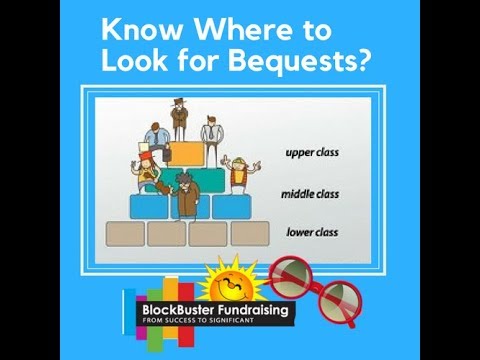
As non-profit pros, we know those beloved Bequests are hugely important to our organization and provide for stable future growth. We all wonder where those bequests will come from and how to identify donors that have true interest in putting our cause in their financial plan.