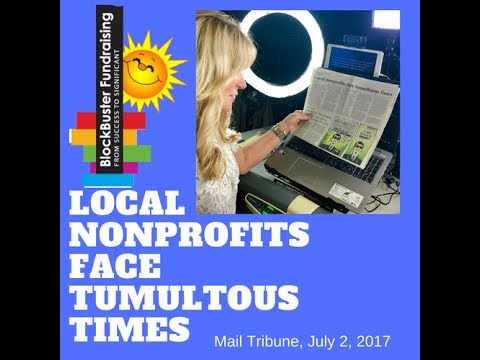
https://youtu.be/PiFhsdP1z_A
Do you think you nonprofit is facing tumultuous times in 2017? Are you uncertain of the future, what to expect next and what to do about it? Recently in Medford, OR a group o nonprofit peeps were called together by the prestigious Oregon Community Foundation to discuss major potential challenges to local nonprofits and here’s what they had to say about the current times for nonprofits in Southern Oregon. How about your area of the country? Would love to hear your thoughts!
Author: JoyOlson
Successful Fundraiser of 22 years; Pet owner and lover; triathlete and sportswoman; Gardner; Love to dance; Music a must; Workaholic

DONOR NOTES WORTH NOTING
Hope you’re getting ready for super July 4th with friend, family and maybe even donors! Fun times and nice conversations build wonderful relationships and when you have a phone and glean an important piece of information you need to remember, make a NOTE! If you’re with a donor, what should you definitely take note of? Watch now for quick tips and Happy 4th!
Create Sense of Urgency in All Your Calls to Action With These Tips
Practice these “Sense of Urgency” tips to get your donors to take immediate action. It’s really good fundraising technique to create immediate momentum with well-crafted calls to action so put these tips to use for great fundraising success!

Are You Celebrating Your Donors?
Time to CELELBRATE! Celebrate Your DONORS and Celebrate Donor Milestones!
Got really inspired by Donor Relations Guru’s blog, “Celebrating Donor Milestones-Reasons to Ring the Bell” and you’re gonna love these inspired ideas! And better than that, so will your donors! Celebrate with me and watch now!
MONTHLY GIVING TECHNIQUES THAT ARE WORKING IN 2017
Develop a great monthly giving program
A monthly giving program can really help your organization. We know that on average 40% of giving from individuals occurs in December. Wouldn’t it be great to spread some of those gifts out over the whole year? Transitioning some of your donors to monthly gifts is the perfect way to do that.
Here are some ideas for how to convince your donors to give monthly.
What to ask for
Setting your monthly giving amount at the appropriate amount is an essential first step. Start with your average online gift amount then take 15-20% of that for your baseline. If your average online gift is $100, set a baseline recurring gift of $15/month and up from there. This is a great starting point for new donors, but for current donors who may be giving more you will want to edit your ask to be specific to their giving level.
Learn from your current monthly donors
If you have a group of monthly donors they can give you great insight into what works and what doesn’t. Call them and ask them for their opinion and thank them for being monthly donors. Find out why they give monthly. What do they have in common? You can use these ideas to reach out to other monthly donors.
Seven groups to target
Here are seven groups of people who are likely to be attracted to the idea of a monthly gift.
• One time donors who give less than $200 each year
• Donors who give more than three times a year
• Young supporters
• Volunteers
• Donors who have given in the past but not last year
• Event attendees
• Former board members
Questions to ask your team
Before you start your monthly giving program, ask your team these questions:
• What do we want to accomplish through monthly giving?
• What does that mean to our programs and our mission?
• What is the result of achieving our goal?
Answering this question will help your donors understand your mission in your monthly giving program and better talk to your donors about why this is important.
2 PROVEN BLUEPRINTS FOR WINNING BACK LAPSED DONOR LETTERS
Could you use a fabulous blueprint for a super successful Lapsed Donor Letter?
How about not just one, but two?
Watch now and snag this wonderful reconnecting donor content for your own lapsed donor mailing this year!
Loving lapsed donors back into the fold | Simple, brilliant and oh so swipe-able!
http://www.jenviano.com/sites/default/files/Lapsed%20Donor%20Letter.pdf
GIVING USA 2017 DATA POINTS TO BUILDING DONOR RELATIONSHIPS
Invest 80% of your Development Time & Efforts in Building Better Donor Relationships! That’s the main Takeaway from Bloomberg on the recent release of the Giving USA 2017 Philanthropic results of 2016 that were just released yesterday! Watch these Relationship Building Secrets now!
2 Winning Lapsed Donor Sample Letters
Could you use a fabulous blueprint for a super successful Lapsed Donor Letter? How about not just one, but two? Watch now and snag this wonderful reconnecting donor content for your own lapsed donor mailing this year!
Loving lapsed donors back into the fold | Simple, brilliant and oh so swipe-able!
http://www.jenviano.com/sites/default/files/Lapsed%20Donor%20Letter.pdf

Lapsed Donor Love Letters to Lure & Reel Them Back
We’re focused on the Lapsed Donors and today focus on best lapsed-letter communications to win your donors back and rebuild those wonderful relationships!

How To Win Back Lapsed Donors
Hey! Gotta a LAPSED DONOR PLAN ready to go now? Why? Because this is a perfect time to regroup and reactivate with a plan to rebuild those relationships before it’s too late! Reach out now with these super tips!

Are You Taking Advantage of Opportunities the Top 2017 Fundraising Trends Offer?
https://youtu.be/vPDdvNvQGO8
Is your NonProfit taking great advantage of the 2017 top fundraising trends?
Watch this video for top ten review and ways you can act now to take action for fabulous 2017 fundraising results!.
Thank you CauseVox for your Top10 Trend List! More help here: https://www.causevox.com/fundraising-plan-calendar/
Why Do Trends Matter to NonProfits?
The National Council of NonProfits has this to say Nonprofit Sector Trends
“Trends in the economy, demographics, technology, communications, and even how we spend our leisure time, can affect the core capacities needed by every charitable nonprofit to be effective and sustainable.
It is our hope that by shining a light on nonprofit trends, those who lead charitable nonprofits, as well as those who invest in their missions, will be armed with information useful for decision making and planning for the future.”
– See more at: https://www.councilofnonprofits.org/nonprofit-sector-trends#sthash.Lot9vsos.dpuf
Summer Stories Predict Sunny Fundraising Results
Storytelling Techniques for Your Fundraising Success
Nonprofit storytelling can be a powerful tool to recruit and motivate donors. Even more than shocking statistics, a story can spur donors to help because it makes the cause real and elicits empathy from potential supporters.
Allison Gauss from Classy.org had some great tips to tap into the power of storytelling.
Components of a Fundraising Story
The Character (Protagonist)
It all starts with a character. The main character gives your donors someone to identify with and care about. This is who they hope for, worry about, fear for, and cheer for. Decide who your character is and put them front and center!
Details
Details are what make your character and story more reliable. Tell your audience something concrete about your character that they will remember.
Goals
What does your character need or want? Your character’s efforts to achieve this goal is what moves your story forward.
Conflict
What is standing in your character’s way?
Villain That Stands In Way
Portray the object standing in your character’s way as a villain. It doesn’t have to be a person, it just needs to be something that your donor can help defeat.
Action
Empower your donor to be part of the story by helping the character reach a happy ending. Tell them what your organization can do with their help.
Ending
End with impact! What have you accomplished together? What progress has your character made? Make it clear that the fight isn’t over and their donation is needed to keep going.
Storytelling strategies
Allison Gauss also gives us four ways to present a story to help donors connect with your cause and move them to action.
#1 – Introduce the main character
Choose just one individual. Donors are much more likely to act when given just one individual rather than groups.
Pro Tips
• Offer details like the individual’s name, location, and personal goals (get permission!)
• Let the individual do that talking. Their story will be more impactful when your character tells it in their own words.
• Use pictures or video of the person so your supporters can put a face with a name.
#2 – Begin with a startling fact or statistic
The shock factor is a sure way to get your audience’s attention.
Pro Tips
• Think outside the box for metrics or facts that are so unexpected they demand an explanation.
• Reveal the people and places behind the headlines. Once you have your donors’ attention, give them more details about the situation on the ground.
#3 – Immerse your audience in a moment of conflict
Tell your story in a heart rendering way that makes your donor feel compelled to help.
Pro Tips
• Be descriptive, not dramatic
• Give your audience details like sights, sounds, and smells and let those evoke emotion.
• It’s not enough to convey devastation, show donors what actions you are taking and how they can help.
#4 – Make your cause a quest
Show your donors what you are planning. Show them a timeline of how you are helping. Tell your donors that with them, you are almost at the happy ending.
Pro Tips
• Use a concrete goal, whether it is a cure or a fundraising milestone, to motivate your audience.
• Explain what problems you have solved along the way that make your long-term goals possible.